
The deadlines that decide a cheque bounce case under Section 138 of the NI Act, for the person who issued the cheque and the person who received it.
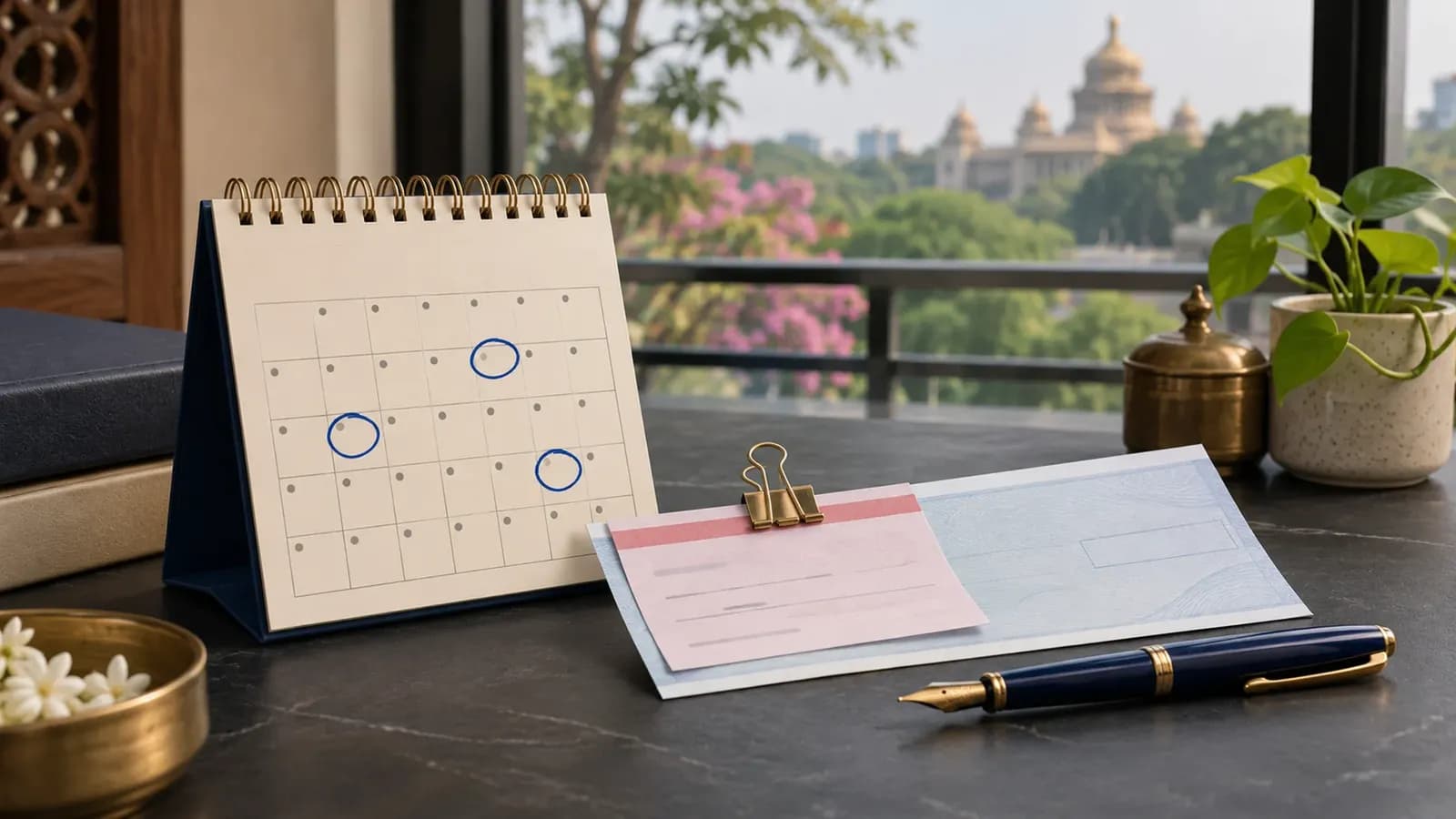
A dishonoured cheque can lead to a criminal complaint under Section 138 of the Negotiable Instruments Act, 1881. The case turns on a short series of deadlines, so whether you issued the cheque or received it, dates matter.
What are the deadlines?
- The cheque must be presented to the bank within its validity, usually three months from its date.
- After the bank returns it unpaid, the payee must send a written demand notice within 30 days of learning of the dishonour.
- The drawer then has 15 days from receiving the notice to pay the amount.
- If payment is not made, the payee may file a complaint before the Magistrate within one month after those 15 days end (Section 142). A court can condone delay for sufficient cause.
You received the notice: what are your options?
- Pay within the 15 days, and keep proof of payment: this usually ends the matter before a complaint.
- Send a considered reply if the cheque was not for a legally enforceable debt, was security, or was misused.
- Keep every document: the loan or invoice record, bank statements, messages and the notice itself.
You are the payee: what should you keep ready?
- The original cheque and the bank’s return memo
- The notice, with proof of dispatch and delivery
- Documents showing the debt or liability
What happens in court?
The offence is punishable with imprisonment of up to two years, a fine of up to twice the cheque amount, or both. The court may order the drawer to pay interim compensation of up to 20 per cent of the cheque amount (Section 143A). The offence is compoundable (Section 147), so the parties can settle at any stage, and many cases end that way.
For how we handle these matters, see our cheque bounce page. If you need advice on your own situation, speak to an advocate before you act.
This article is general information, not legal advice. The law and its application depend on the facts of each matter.
 Criminal Law
 Criminal Law
 Criminal Law
